![]() |
|
![]() |
||
![]() |
| Phoenix History | |||||||||||||||||||||||||||||||||||||||||||||||||||||||||||||||||||||||||||||||||||||||||
|---|---|---|---|---|---|---|---|---|---|---|---|---|---|---|---|---|---|---|---|---|---|---|---|---|---|---|---|---|---|---|---|---|---|---|---|---|---|---|---|---|---|---|---|---|---|---|---|---|---|---|---|---|---|---|---|---|---|---|---|---|---|---|---|---|---|---|---|---|---|---|---|---|---|---|---|---|---|---|---|---|---|---|---|---|---|---|---|---|---|
|
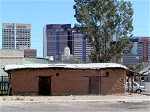
What do Phoenix, Arizona and Jamestown, Virginia--the first permanent English settlement in America--have in common? John Smith was instrumental in the establishment of both towns. More precisely, a John Smith helped establish each town. Our John Smith was a Lieutenant in the U.S. Army at Fort McDowell, which was established 258 years after Jamestown's settlement in 1607. When Lieutenant Smith mustered out of the Army not long after the fort was opened, he decided to stay in the valley and sell hay to the post. He located what was to become know as "Smiths Station" eighteen miles south of the fort, near present day 40th Street and Washington. It was there in the flood plain of the Salt River that he had seen wild hay growing. In 1867 Smiths Station was visited by a gregarious redheaded adventurer named Jack Swilling. Swilling, then thirty-seven, had been an Indian fighter, Union scout, Confederate officer, and gold prospector. His project this time was to clean out some of the ancient canals built by the Hohokam Indians and bring water from the Salt River to the dry valley land. Between 700 A.D. and 1100 A.D., the Hohokams had engineered an extensive network of canals to grow barley, cotton, and other crops in the desert.PH1 With $400 raised from investors and an initial labor force of 16, the Swilling Irrigation Canal Company cleared a ditch running from the Salt River near present day 40th Street, north to Van Buren, and west to around 27th Avenue. By 1870, the federal census gave the valley a population of 164 men and 61 women, all between the ages of twenty-one and thirty. It was time that an official town site be selected. In October, the valley citizens met to select some public land for a town. The site eventually selected was on the North bank of the Salt River. The first lot, at the corner of Washington and Montezuma (now First Street), sold for $104 in December, 1870. A lot of lots have been sold since the first one, and a lot of people have moved to Phoenix. So many have come that Phoenix surpassed Tucson as the largest city in the state in 1920. In 1950, Phoenix was named among the nation's 100 largest cities, though just barely. In the 2000 census, it was listed as the sixth largest city in the U.S.
|
|
||||||||||||||||||||||||||||||||||||||||||||||||||||||||||||||||||||||||||||||||||||||||
| Street Names | |||||||||||||||||||||||||||||||||||||||||||||||||||||||||||||||||||||||||||||||||||||||||
|
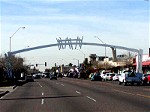
Some street names simply cry out for an explanation. Others quietly hide their origins behind a name that seems to need no explanation. The streets below are some that have aroused my curiosity in nearly three decades of driving around the valley. Presidential and Numbered Streets The early layout of Phoenix was a simple grid, destined to prove that nothing is quite as simple as it seems. The major streets running east-west were named for the U.S. Presidents, with Washington in the middle. Subsequent presidents gave their names to alternating streets first to the north, then the south in order of office. Adams became the first street to the north of Washington, Jefferson the first south, and so on. Indian names were used, more or less, for north-south streets: Cocopah, Yuma, Papago, Mojave, Cortez, Montezuma, Maricopa, Pinal, Arivipai, Tonto, Apache. This scheme of street names began to fall apart from the beginning. Poor John Quincy Adams had to share a street with his father. Madison and Monroe were swapped from the locations that the rotation would have given them. Tyler, Johnson, Hayes, and Cleveland were forgotten completely. If Chester A. Arthur was thought of at all, he was surely an afterthought since tiny Arthur Street runs north-south between Central & 7th Street. After Roosevelt, the presidential street name idea was abandoned. The Indian names for north-south streets faired even worse. They were dropped in favor of numbers, ascending in both directions from Central Avenue (originally Centre Street) Avenues to the west, Streets to the east. Not all numbered avenues got their names at the same time. 27 north-south streets across the valley were "laterals" that ran a long a series of farming canals one mile apart. Until the 1940's when the county gave 27th Avenue its present name, it was called Lateral 14. (Hayden Road was Lateral 3 until that time.) The Bethany Home Road led, not surprisingly, to the Bethany Home, way outside the city near what is now 15th Avenue. The "home" was tuberculosis sanitarium operated by a religious organization in the early 1900's. The namesake of the home is an ancient town near Jerusalem. Sanitariums were the mainstay for tuberculosis treatment from the mid 1800's until after 1944 when the antibiotic streptomycin was first administered to patients. The valley's warm, dry climate made the valley a prime location for sanitariums. So many tuberculosis patients stayed in white tents outside Scottsdale that it became know as the "White City." Cactus Road is supposedly named after another TB camp where tents and shacks of suffers were situated in the early 1900's. There really was an Indian School at Indian School Road and Central Avenue from 1891 until 1990. The boarding school for Indians was one of many across the country operated by the federal government in an attempt to mainstream them into white culture. The theory described by an early journalist was, "It is better to educate the Indian people than to kill them." Thunderbird Road ran by Thunderbird Field Number One at a private flying school around the time of World War II. McDowell Road shares its name with Fort McDowell, the McDowell Mountain Range, McDowell Mountain, and McDowell Peak. The McDowell in question is Civil War General Irwin McDowell (1818-1885). A graduate of West Point, McDowell was in command of Union troops when they were routed at the Battle of Bull Run. His career survived and he was twice appointed to command of the department of the Pacific. He reportedly never visited Arizona, and is interred in the National Cemetery on the Presidio Military Reservation, San Francisco. Greenway Road owes its name to mining magnate General John Campbell Greenway (1872-1926). An engineering graduate from Yale, and Rough Rider, he was commissioned as a brigadier general for service on the front line in France during World War I. Greenway came to Arizona in 1910 to manage Bisbee mines owned by the Calumet and Arizona Company. He negotiated the purchase of the Ajo mines, and by developed a leaching process which he patented and locating a water supply, turned the area into a profitable mining community. In 1925 Greenway turned his attention to supplying water to Arizona by damming the Colorado River in the Grand Canyon. While attempting to obtain congressional backing, he had a gall bladder attack, and died following surgery. He was survived by Isabella S. Greenway whom he had married only two years earlier. Born in 1886, she had been a old flame of Greenway, but married one of his best friends who had also been a Rough Rider. She came west with her first husband for treatment of his tuberculosis. Two years after his death, she and the General were married. Isabella Greenway took over management of her deceased husband's substantial business interests. A bridesmaid at the marriage of her childhood friend Eleanor to Franklin D. Roosevelt, she gave the seconding speech to his presidential nomination at the 1932 Democratic National Convention. In 1935, she became the first woman from Arizona to be elected to Congress. In Tucson, she opened both the famous Arizona Inn and a birth control clinic in spite of the Catholic Church's objections to the latter. She died in Tucson in 1953. Sidney Preston Osborn (1884-1948) was the state's 11th governor--7th if you don't count repeats, or 29th if you count repeats, territorial governors, and the one who died before taking office. There may never have been another governor more suited to the office or with a greater public appeal. In his sixth grade school books, he wrote "Sidney P. Osborn, Governor of Arizona." He was the first governor to be elected to four consecutive terms, serving from 1941 through 1948. His death in office from Lou Gehrig's Disease, evoked a great outpouring of public sympathy. It would be no surprise that a sympathetic city would name a street after the popular governor. Osborn Road was not named after Governor Osborn. At the time the street was named, Sidney was a mere teen, and although he was one of Phoenix Union High's first football stars, it is unlikely that he had yet done anything to warrant having a street named after him. The road in question ran by the south edge of the Osborn family farm, near Central, and had been homesteaded by a relative of Sidney's, John Preston Osborn, in the late 1870's. The street became know as Osborn Road around the time of John Osborn's death in 1900 at the age of 84. Shea Boulevard and Bell Road were named after James A. Shea and Harvey Bell. Shea and Bell were two farmers getting by with well water for irrigation. They saw more potential for Paradise Valley if an old irrigation idea were resurrected. In the 1890's the Rio Verde Canal Company promoted a canal west from the Verde River, along the base of the McDowell Mountains, and on to Union Hills which would make that area a "Paradise Valley." The company drilled a tunnel at Horseshoe Dam and dug about twenty miles of canals before the venture failed around 1901. Fifteen years later Shea and Bell organized the Paradise Verde Irrigation District. The district took on the Salt Water Users Association in a battle over the valley's water which lasted nearly twenty years. In 1934, the Secretary of the Interior ruled in favor of the other group. Paradise Valley remained a dry vision until after World War II when developers saw uses that did not require irrigation. Broadway Road was not named after New York's famous street, nor was it especially wide. Its name comes from Noah Broadway who owned much land in the area now known as south Phoenix. Borrowed Names Grand Avenue was borrowed from Fresno, California. In 1887 developers from that city were inspired to create a quick, easy route cutting diagonally from downtown Phoenix to lure settlers to the west side. Really! Practical Names The original main survey line of the valley started from a point atop a small butte east of what is now the Phoenix International Raceway. The rest of the valley was measured from a line extending east and west of that point, called "the Salt River and Gila Baseline and Meridian." Fortunately for sign makers, the name adopted for the road following that line was shortened to Baseline Road. |
|
||||||||||||||||||||||||||||||||||||||||||||||||||||||||||||||||||||||||||||||||||||||||
|
|||||||||||||||||||||||||||||||||||||||||||||||||||||||||||||||||||||||||||||||||||||||||
|
|||||||||||||||||||||||||||||||||||||||||||||||||||||||||||||||||||||||||||||||||||||||||
|
|||||||||||||||||||||||||||||||||||||||||||||||||||||||||||||||||||||||||||||||||||||||||
| Googie in Phoenix | |||||||||||||||||||||||||||||||||||||||||||||||||||||||||||||||||||||||||||||||||||||||||
| The future isn't what it used
to be, at least as far as commercial architecture is concerned. In
the 1950's and 60's an evolving building style thrust passersby into the
architect's view of the future. These futuristic creations which
look like they might have been teleported from Tomorrowland or the Jetsons
actually owe their origins to the intense competition for attention
between roadside businesses--primarily coffee shops--in Los Angeles.
"Serious" architects were aghast by this development. Editor Douglas Haskell found the style epitomized by the Googies Coffee Shop at at the corner of Sunset Boulevard and Crescent Heights in Los Angeles, and dubbed the style as "Googie architecture" in an article in a 1952 issue of House and Home. This name swept architectural circles, primarily as a pejorative reference to design excesses. Elements of GoogieG1 include:
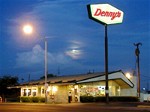
Where coffee shops are concerned, nothing succeeds like excess. The style spread from its Mecca in LA through the nation. Phoenix, not infrequently thought of as aspiring to become LA, could not resist. Though the Googies peaked with the Space Needle at the 1964 World's Fair, a number of fine examples of this style remain in Phoenix. Two prime contributors to Googie in Phoenix were the Dennys and Big Boy restaurant chains. The first DennysG2 in Phoenix was at Van Buren and 32nd Street. It remains in nearly pristine condition, proudly displaying the boomerang shape roof floating above a sheet glass wall. Inside, a large shelf hovers above the original counter. JB's is successor to the Bob's Big Boy restaurants in Phoenix. At first, the restaurants became JP's Big Boy Restaurants. Then they became just JB's. In an unfortunate attempt to leave the past behind, JB's smothered the Googie with updated facades. The result is a building that is neither historic nor modern. Though the Christown Lanes at Bethany and 19th Avenue opened in 1975, they uphold the finest tradition of 1960's Googie. |
|
||||||||||||||||||||||||||||||||||||||||||||||||||||||||||||||||||||||||||||||||||||||||
|
|||||||||||||||||||||||||||||||||||||||||||||||||||||||||||||||||||||||||||||||||||||||||
|
|||||||||||||||||||||||||||||||||||||||||||||||||||||||||||||||||||||||||||||||||||||||||
|
|||||||||||||||||||||||||||||||||||||||||||||||||||||||||||||||||||||||||||||||||||||||||
| "Your have the right to remain silent. ..." Miranda v. Arizona | |||||||||||||||||||||||||||||||||||||||||||||||||||||||||||||||||||||||||||||||||||||||||
| For nearly 40 years police have
been reading suspects their rights because of a landmark 1966 United
States Supreme Court case, Miranda v. ArizonaM1
That case had its origins in an interrogation room of the Phoenix Police
Department.
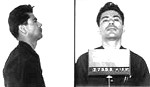
Ernesto Miranda was an eighth grade drop out with a criminal record and pronounced sexual fantasies. On March 13, 1963, Phoenix police went to his home and arrested him for the kidnap and rape of a mildly retarded 18-year-old woman. He was taken to a police station where a witness identified him. Two officers questioned him in "Interrogation Room No. 2" of the detective bureau. Two hours later, the officers emerged from the interrogation room with a written confession signed by Miranda. The confession had a paragraph typed at the top which stated the confession was made "with full knowledge of my legal rights, understanding any statement I make may be used against me." At trial, no evidence was presented that Miranda had ever been told that he did not have to talk to police or that he had the right to a lawyer. The defense objected to letting the jury see the confession, but the judge overruled the objection. He allowed the jury to consider the written confession as well as officers testimony about an oral confession made during the interrogation. The jury found Miranda found guilty of kidnapping and rape. He was sentenced to 20 to 30 years on each of the two counts, to be served concurrently. The Supreme Court of the United States reviewed the case and found that Miranda's Fifth AmendmentM2 right against self incrimination had been violated. Chief Justice Earl Warren wrote the majority opinion of the Supreme Court which stated that in order to combat the "inherently compelling pressures which work to undermine the individual's will to resist" during in-custody interrogation, "to permit a full opportunity to exercise the privilege against self-incrimination, the accused must be adequately and effectively apprised of his rights and the exercise of those rights must be fully honored." The court's opinion went on to state the now familiar statement beginning with "You have the right to remain silent." The result of the failure to give the Miranda warning does not automatically result in the defendant going free. It only means that the confession cannot be used against the defendant. Ernesto Miranda was tried again without the confession. He was convicted and served 11 years before he was paroled in 1972. After several other returns to prison on other charges, he was stabbed to death during an argument in a bar in 1976. He was 34. A suspect was arrested, but he chose to exercise his right to remain silent after being read his Miranda rights. The suspect was released, and no one was ever charged with the murder. The Miranda decision was seriously challenged when Congress enacted 18 U. S. C. §3501. That statute allows a confession to be admitted into evidence if it is found to be voluntary, even if the defendant was not given the Miranda warning. The Supreme Court reviewed this statute in Dickerson v. U.S., No. 99-5525 (June 26, 2000), and found that it was an invalid attempt to change the result of the Miranda case. In a 7-2 vote, it held that the Miranda warning requirement was based on the constitution, and that Congress could not change it by legislation. As a result, the requirement that the Miranda warnings be given in order for a statement of the defendant to be admitted into evidence continues to be the law, and has an ever greater majority on the Supreme Court than the original holding. |
|
||||||||||||||||||||||||||||||||||||||||||||||||||||||||||||||||||||||||||||||||||||||||
|
|||||||||||||||||||||||||||||||||||||||||||||||||||||||||||||||||||||||||||||||||||||||||
|
|||||||||||||||||||||||||||||||||||||||||||||||||||||||||||||||||||||||||||||||||||||||||
|
|||||||||||||||||||||||||||||||||||||||||||||||||||||||||||||||||||||||||||||||||||||||||
|
|||||||||||||||||||||||||||||||||||||||||||||||||||||||||||||||||||||||||||||||||||||||||
| Sandra Day O'Connor and Her Courthouse | |||||||||||||||||||||||||||||||||||||||||||||||||||||||||||||||||||||||||||||||||||||||||
| In 1999 Arizona's U.S. Senators
Jon Kyle and John McCain introduced legislation to name a new federal
courthouse under construction at 401 W. Washington Street after the
state's most distinguished jurist. It is unusual for a federal building to
be named after a public servant who is still serving, but Sandra Day
O'Connor is an unusual woman.
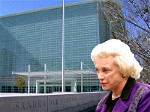
Born in 1930, in El Paso, Texas, and raised on a 160,000 acre family ranch in southeast Arizona where the nearest neighbor was 25 miles away, Sandra Day learned to drive, ride horses, and shoot rifles by the time she was eight when her only brother was born. After graduating from high school at 16, she received a bachelor's degree magna cum laude at Stanford University majoring in economics which she believe would be helpful in managing the ranch. Inspired by a legal dispute over the family ranch, she went on to study law at Stanford where she received her law degree in two years instead of the usual three. While studying law, she met two men with whom she was destined to have long lasting and rewarding relationships. Graduating first in the class of 102 law students was William H. Rehnquist. He would precede Sandra Day to the U.S. Supreme Court with his appointment in 1971, becoming Chief Justice in 1986, and would be her conservative mentor on the bench. She would have closer ties with the other man she met in law school, John Jay O'Connor. With him, she would share over 50 years of marriage, three sons, and a life in the law. In the 1950's--the era of Perry Mason--it was not easy for a woman, even one who had graduated third in her law class, to find employment as a lawyer. Seeking a position in California, the best offer she received from any law firm was that of legal secretary. Years later, a senior partner in the firm making the offer would assist her nomination to the Supreme Court from his subsequent position as Attorney General.O1 Upon settling in Arizona with her husband who was to achieve prominence as a senior partner in major law firm, Sandra Day O'Connor was again unable to find employment in a private firm, so she started her own practice. While taking time off to be a full time mother, she devoted much time to volunteer work and becoming active in the Republican Party. After returning to work as an assistant state attorney general, she was appointed to fill a vacated state senate seat, to which she won election in the subsequent two terms, eventually becoming the first female majority leader in any state legislature. In 1974, before the present system of judicial appointments, she successfully ran for Maricopa County Superior Court judge. In 1979, she was appointed to the Court of Appeals by the state's Democrat governor. Within two years, President Ronald Reagan would nominate her to become, in 1981, the first woman to serve on the United States Supreme Court. Known as a conservative on the court, she has not been reluctant to take moderate positions becoming the swing vote on many issues. Her independence of judgment led Time magazine to list her as the fifth most powerful person in Washington in 1993. A panel of six academic and popular historians assembled by The Arizona Republic to mark Arizona's 90th year of statehood named Sandra Day O'Connor as the eighth most important person in Arizona's history. The New York architects that designed the courthouse, Richard Meier & Partners, conceived the six story glass roofed and walled atrium as a transitional space between the hot, dry desert outdoors and the air conditioned courtrooms. To cool this space, they would use what they describe as the "phenomenon of adiabatic cooling," in which "the increase in the humidity of a given space generates a substantial drop in air temperature, without a significant addition of energy."O2 Phoenix residents would describe the concept using the less eloquent terms "evaporative" or "swamp" cooling. Had designers asked residents familiar with swamp cooling in the hot, humid late summer days, they may have also heard the phrase, "it doesn't work." In the first summer, visitors who were able to dash across the atrium to the air conditioned office spaces and courtrooms managed just fine. The security guards that had to man their stations hours at a time fared less well. A special authorization from Washington D.C. allowed them to forgo their traditional coats and ties in favor of Mexican style guayabera shirts, but still sweat trickled down their collars. New lawyers sweating through swearing in ceremonies in May heard the Chief Justice of the Arizona Supreme Court, Thomas Zlaket, joke that steamy situation seemed ripe for a lawsuit, while a judicial assistant quipped that this could be one of the new lawyer's first case. |
|
||||||||||||||||||||||||||||||||||||||||||||||||||||||||||||||||||||||||||||||||||||||||
|
|||||||||||||||||||||||||||||||||||||||||||||||||||||||||||||||||||||||||||||||||||||||||
|
|||||||||||||||||||||||||||||||||||||||||||||||||||||||||||||||||||||||||||||||||||||||||
| Diamondback Fever at the B.O.B. | |||||||||||||||||||||||||||||||||||||||||||||||||||||||||||||||||||||||||||||||||||||||||
|
|||||||||||||||||||||||||||||||||||||||||||||||||||||||||||||||||||||||||||||||||||||||||
| The Arizona
Diamondbacks trailed the New York Yankees 2-1 with one out in the bottom
of the 9th inning of the last game of the 2001 World Series. The
Yankees--winners of four of the last five World Championships-- were
virtually assured of another victory. Phoenix sportscasters gathered
in the Diamondback locker room to interview the losing team while the New
York media prepared to storm the field where the winning team would
congregate.
But the Diamondback's had two men on base when Yankee's ace pitcher Mariano Rivera made an unthinkable throwing error which allowed Tony Womack steal home. The game was tied at 2-2. Luis Gonzalez who had been stuck out by Rivera in the previous inning was at bat. This time Gonzalez hit a fly ball that made it just far enough to allow Jay Bell to score, and the Diamondbacks were the 2001 World Series Champions! The New York Yankees have been a major league franchise longer than Arizona has been a state.B1 The Diamondbacks played their first game on the night of March 31, 1998. How could a team so new achieve such remarkable success? The curmudgeons among us would say it is no secret: massive taxpayer funding and massive debt. In 1989, Phoenix voters passed a referendum by a 2-1 majority requiring public approval if the city was to build any sports facility worth more than $3 million. In an end run around voter sentiment, the Arizona legislature passed a bill transferring authority for stadium development from the city to the county. The B.O.B. was born in February, 1994 when the Maricopa Board of Supervisors approved a quarter cent increase in the county sales tax to raise $238 million for the ballpark. Two of the three supervisors that voted for the tax did not survive re-election. Mary Rose Wilcox, who cast the deciding vote, survived re-election as well as the bullet of a tax protester which lodged in her posterior.B2 The taxpayer contribution did not come close to funding the Diamondbacks. The team had to cover construction cost overruns resulting in $127 million in debt. Major League Baseball required a $130 million expansion in addition to forgoing $125 million in national television revenues during the franchise's first five years. The players did not come cheap. Diamondback payroll for the 2001 season totaled $81 million--the eighth highest among the 30 major league teams. Compared to the losing Yankees, this was a bargain. Yankee payroll was number one, topping $109 million. The Diamondback players even deferred $30 million of their pay.
|
|
||||||||||||||||||||||||||||||||||||||||||||||||||||||||||||||||||||||||||||||||||||||||
|
|||||||||||||||||||||||||||||||||||||||||||||||||||||||||||||||||||||||||||||||||||||||||
|
|||||||||||||||||||||||||||||||||||||||||||||||||||||||||||||||||||||||||||||||||||||||||
|
|||||||||||||||||||||||||||||||||||||||||||||||||||||||||||||||||||||||||||||||||||||||||
|
|||||||||||||||||||||||||||||||||||||||||||||||||||||||||||||||||||||||||||||||||||||||||
| Footnotes and Sources | |||||||||||||||||||||||||||||||||||||||||||||||||||||||||||||||||||||||||||||||||||||||||
|
1. American
FactFinder, U.S. Census Bureau. Footnotes and Sources for Phoenix History: PH1. The Pueblo
Grande Museum and Archaeological Park at 4619 E. Washington Street, is
near the beginning of the Swilling canal. The park features
archaeological excavation of Hohokam ruins, and recreation of some of
their dwellings. PH2. Phoenix Population table: Rank
refers to rank according to population among U.S. Cities. Sources
for population data are: _______, "Jamestown (Virginia)," "Phoenix (city, Arizona)," "Smith, John (colonizer)," Microsoft® Encarta® Encyclopedia 2001, Microsoft Corporation, 1993-2000. Barnes, Will C., Arizona Place Names, The University of Arizona Press, Tucson, 1997, pp. 327-328. Trimble, Marshall, Roadside History of Arizona, Mountain Press Publishing Company, Missoula, 1986, pp. 147-156. Sources for Street Names: _______, Brief History of Tuberculosis," July 23, 1996, New Jersey Medical School National Tuberculosis Center, 1996. _______, History, Phoenix City Site, Chinese.com, accessed 7-17-01. _______, "Presidents of the United States," Encarta® 2001 Almanac, © Copyright 1999, 2000 Microsoft Corporation. _______, "GENERAL IRVIN McDOWELL, Death of the Hero and Warrior at Midnight," Daily Alta California, San Francisco, May 5, 1885. _______, "The story of John Campbell Greenway and Ajo," Ajo Copper News, Ajo, AZ, accessed 2-18-2002. _______, "DRIVER'S SEAT." The Arizona Republic, 02-29-2000, pp B2. Barnes, Will C., Arizona Place Names, The University of Arizona Press, Tucson, 1997, pp. 258-259. Dyer, C. J., Map of Phoenix, circa 1985, Cities & Towns, Library of Congress. Largo, Earthy, "Update on Phoenix Indian School Property.", Au-Authm Action News, 08-31-1995, pp PG. Petrie, Bob, "VALLEY STREET NAMES HAVE HISTORIES OF THEIR OWN." The Arizona Republic, 02-24-2000, pp B2. Reid, Betty, "ABOUT 'THAT WHITE THING' ACROSS MCDOWELL," The Arizona Republic, 03-12-2000, p. F3. Scott, Jeffrey, "Sidney P. Osborn," Arizona's Governors, Arizona History Reference Guides, accessed 2-26-02. Thompson, Clay, "Greenway Road named after a hero", The Arizona Republic, 02-17-2002, pp B8. Thompson, Clay, "VAL 101\ ORIGINAL BETHANY HOME WAS EARLY 1900S TUBERCULOSIS SANITARIUM.", The Arizona Republic, 01-02-2000, pp B3. Trimble, Marshall, Roadside History of Arizona, Mountain Press Publishing Company, Missoula, 1986, pp. 173-174. Weeks, Dick , "Irvin McDowell," Civil War Biographies, Shotgun's Home of the American Civil War, accessed 1-25-02. Footnotes and Sources for Googie in Phoenix: G1. Googie Architecture: A
post-WWII architecture style which thrived in the 1950s and 1960s,
featuring bold angles, colorful signs, plate glass, and pop-culture
imagery, resulting in buildings that look as if they belong in
Tomorrowland or Jetsons cartoon. The name is derived from the 1949
design of Googie's coffee shop at the corner of Sunset Boulevard and
Crescent Heights in Los Angeles. See Googie
Architecture Online, Googie
Central, and Shelby Grad, Googie
Architecture. G2. Harold Butler opened Danny's Donuts in
Lakewood, CA in 1953. As more shops were added in 1954, the menu was
expanded and the name changed to Danny's Coffee Shops. By the end of 1959,
there were 20 restaurants in the chain and the name was changed to Dennys
Coffee Shops. In 1963 there were 78 restaurants in seven western states. History
of Dennys, accessed 7-9-01. Alan Hess, Googie: fifties coffee shop architecture, Chronicle Books, San Francisco, 1985. Kurt Andersen, "DESIGN: LEGACY OF THE GOLDEN ARCHES HIGHBROWS CELEBRATE LOWBROW FAST-FOOD ARCHITECTURE." , Time, 06-02-1986, pp 71. Footnotes and Sources for "Your have the right to remain silent..." Miranda v. Arizona: M1. Miranda v. Arizona, 384 U.S.
436 (1966). The Miranda case from which the rule takes its name was
one of 4 cases combined for review by the Supreme court where a confession
taken without the defendant being advised of his rights was admitted at
trial. The other cases were: Vignera v. New York
[Michael Vignera was convicted of the robbery of a Brooklyn dress shop.
He was subsequently adjudged a third-felony offender and sentenced to 30
to 60 years' imprisonment. Lower court conviction reversed.]; Westover
v. United States [Carl Calvin Westover was convicted of
robberies of a savings & loan and a bank in California. He
received two consecutive 15 year sentences. Lower courts conviction
reversed.]; California v. Stewart [Roy Allen Stewart was
convicted and sentenced to death for robbery and murder arising out of a
purse-snatch robbery in which the victim had died. Appellate court's
reversal affirmed.] John J. Flynn argued the case for Miranda, and
Gary K. Nelson, Assistant Attorney General of Arizona argued the case for
the State of Arizona. M2. "No person shall be held to answer for
a capital, or otherwise infamous crime, unless on a presentment or
indictment of a Grand Jury, except in cases arising in the land or naval
forces, or in the Militia, when in actual service in time of War or public
danger; nor shall any person be subject for the same offense to be twice
put in jeopardy of life or limb; nor shall be compelled in any criminal
case to be a witness against himself, nor be deprived of life,
liberty, or property, without due process of law; nor shall private
property be taken for public use, without just compensation."
"Bill of Rights," Constitution of the United States,
Amendment V. [Emphasis added.] ________, "Miranda v. Arizona," britanica.com, accessed 7-28-01. ________, Miranda v. Arizona, 384 U.S. 436 (1966). Full text may be accessed at "MIRANDA v. ARIZONA," Touro College Law Center, accessed 7-28-01, and "MIRANDA v. ARIZONA," FindLaw for Legal Professionals, accessed 7-28-01. ________, "Supreme Court reaffirms that police must read Miranda rights to criminal suspects," CNN.com, accessed 7-28-01. ________, "What is the Miranda Warning?", CourtTV Criminal Law, American Lawyer Media, L.P. and Little, Brown and Company, Inc., accessed 7-28-01. Gold, Susan Dudley, Miranda v. Arizona (1966), Twenty-First Century Books, New York, 1995. Riley, Gail Blasser, Miranda v. Arizona, Rights of the Accused, Enslow Publishers, Hillside, New Jersey, 1994. Warren, Earl, Warren's handwritten notes concerning the Miranda decision, American Treasures of the Library of Congress, The Library of Congress, accessed 7-28-01. Wice, Paul B., Miranda v. Arizona "You have the right to remain silent...", Franklin Watts, Danbury, Connecticut, 1996. Footnotes and Sources for Sandra Day O'Connor and Her Courthouse: O1. William French Smith (1917-1990), U.S.
Attorney General, 1981-85. Lawrence Kestenbaum, Index
to Politicians: Smith, U to Z, The
Political Graveyard, accessed 2-21-02. O2. Federal
Building & United States Courthouse Phoenix, Arizona, Richard
Meier & Partners, accessed 2-20-2002. ________, "KYL, MCCAIN SEEK TO NAME COURTHOUSE FOR SANDRA DAY O'CONNOR." Capitol Hill Press Releases, 09-16-1999. ________, "THE WEEK: THE 10 MOST POWERFUL PEOPLE IN WASHINGTON." Time, 05-31-1993, pp 16. Goldman, Jerry, "Sandra Day O'Connor Biographical Sketch," The Oyez Project, Northwestern University, © 1996-2002. O'Connor, Sandra Day, and H. Alan Day, Lazy B--Growing up on a cattle ranch in the American Southwest, Random House, New York, 2002. Pitzl, Mary Jo, "Courthouse hothouse," The Arizona Republic, September 8, 2001, p. B1. Richard de Uriarte, "THE 10 MOST IMPORTANT PEOPLE IN ARIZONA HISTORY." The Arizona Republic, 02-10-2002, pp V1. Footnotes and Sources for Diamondback Fever at the B.O.B.: B1. The New York Yankees started as the
Baltimore Orioles in 1901. They became the New York Highlanders in
1903, changing their name to the Yankees when they moved from their park
at one of the highest points in the city in 1913. [__________, Yankee
History, Brad's Ultimate New
York Yankee Website, accessed 11-10-01.] B2. The interest of the assassin, Larry
Naman, in protesting the tax is unclear. As a homeless man, Naman
would seem to have less interest than most in protesting a sales tax
increase. Mrs. Wilcox was not the only one he wanted to shoot.
He also named Jerry Colangelo, Phoenix Suns players, and a radio talk show
host that supported the stadium among his other targets. He was
convicted of attempted first-degree murder. [Associated Press,
"Phoenix man guilty of attacking official: He cited county
supervisor's support of tax to build stadium as shooting motive.", The
Dallas Morning News, 05-05-1998, pp 12B.] Naman was sentenced to
15 years in prison. [Tim Molloy, Associated Press Writer,
"Transient receives 15 years for shooting county supervisor.",
AP Online, 07-13-1998.] __________, "Bank One Ballpark", Ballparks by Munsey & Suppes, 2001. __________, "Bank One Ballpark," Baseball Sport Betting, Accessed 11-11-01. __________, "Salaries," ESPN.com, Copyright ©2001 ESPN. Blackburn, Martin, "Baseball: PHOENIX FROM THE FLAMES.", The Mirror, 11-06-2001, pp 54. Cagan, Joanna and Neil Demause, "Field of Schemes: How the Great Stadium Swindle Turns Public Money into Private Profit", copyright 1998-2000. Dougherty, John , "How the diamondbacks used huge debts to level the playing field of pro baseball," Phoenix New Times Online, New Times, November 1, 2001. Dougherty, John, "All in the Family--County supervisor and her brother-in-law both have an interest in Bank One Ballpark," Phoenix New Times Online, New Times, December 28, 2000. Stark, Jayson, "'It must be true:' D-Backs are champs," ESPN.com, Monday, November 5, 2001. | |||||||||||||||||||||||||||||||||||||||||||||||||||||||||||||||||||||||||||||||||||||||||